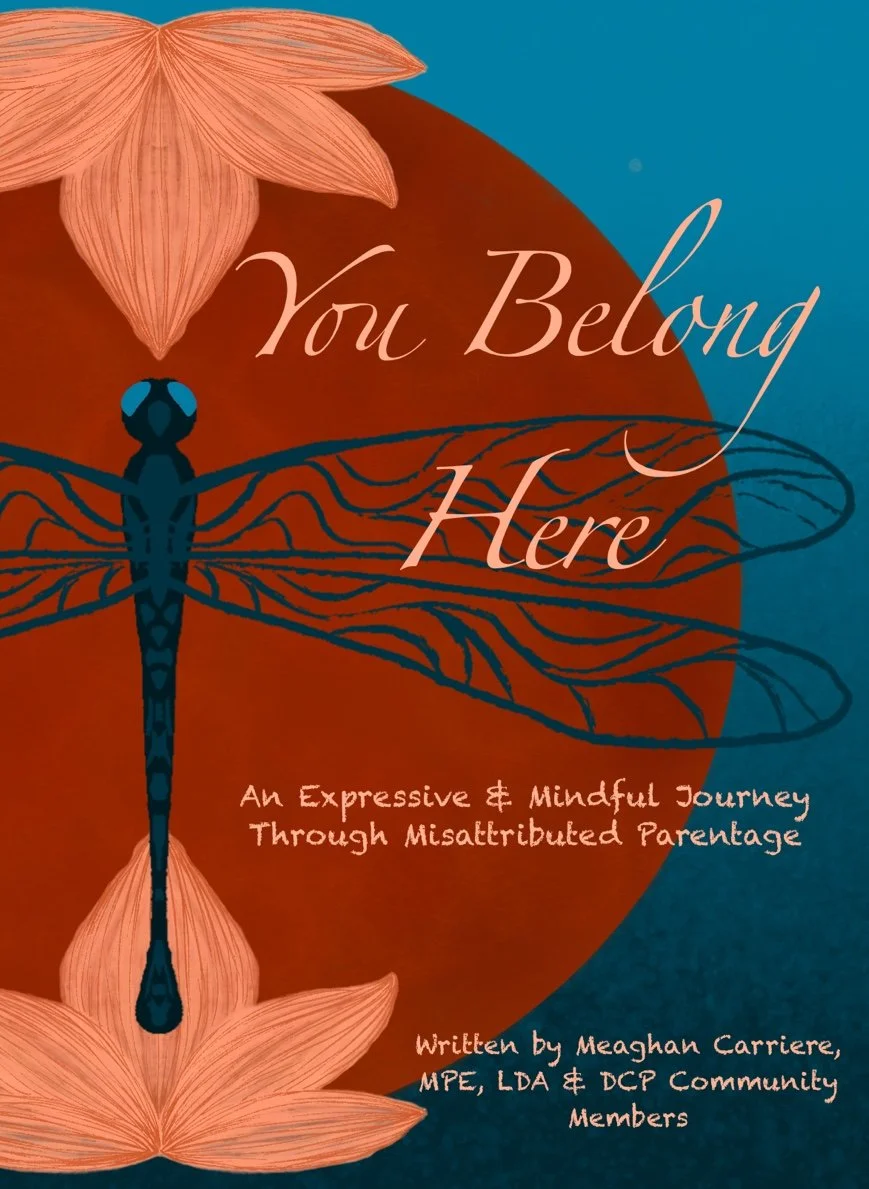
If you’ve had a parentage surprise, you can find helpful resources here.
You may feel relieved to learn that your experience has a name. You may be called:
LDA: Late Discovery Adoptee
NPE: Not Parent Expected or Non-Paternity Event
DCP: Donor Conceived Person
You may have learned of your parentage by accident or by a surprise DNA result. Please keep reading to learn more.

Non-Linear Recovery Journey
-

Discovery, Confrontation, Floating
Discovery
Our journey begins when we discovery our parentage is not as we had believed. This is the first of many discoveries as we try to recover our personal information and heal from the trauma of familial separation, damaged trust with the family who raised us.
Confrontation
We often feel the need to confront family members and others involved in an effort to hear the truth about our origins. We also confront our selves in this process. Feelings of anger, shame and worthlessness are common. Family conflicts sometimes lead to major breaks in relationship or even estrangement. Learning to manage personal boundaries becomes paramount.
The people who raised us can help by apologizing, not making excuses, and by sharing the truth about our story freely.
Floating
Emotional responses can feel intense and overwhelming. Many refer to the experience as “floating”. Shock, denial, sadness, anger, betrayal, fear, grief, relief, overwhelm, numbing, confusion, isolation, and flashbacks are common.
The nervous system is often chronically dysregulated. Self-care and resourcing support become priorities to restore feelings of safety and resilience.
-

Isolation, Exposure, Depression, Identity
Isolation
We experience feelings of disconnection from self and others. We learn that most people cannot relate to our suffering. We may desire support while feeling at a loss as to where to find it, and fearful of being misunderstood.
Exposure
We feel increasingly vulnerable and struggle to know when or how to share our news with others.
Depression
Trauma symptoms may affect our ability to function; anxiety, shaking, numbing, overwhelming emotions, sleeplessness, and a sense of loss is common.
Identity Confusion
We may be constantly reviewing our childhood memories in an effort to make sense of this new information. Possibly feeling forced to creating a new identity.
We question: Who am I? What does this mean? What is my story? How do I make sense of this?
Humans are meant to have a fairly established identity by adulthood, and are not meant to re-create it at this stage of life. Identity issues can feel especially challenging.
-

Reaching Out and Gradual Integration
Reaching Out
We seek support in therapy and support groups, both online and in-person.
We learn more about about trauma, PTSD, adoption, family dynamics, self-care, boundaries, and communication.
Many consider search and reunion. Occasionally, we are unable to reunite due to death, safety concerns, or rejection.
Many feel a desire to share their story in an effort to support others.
Gradual Integration and Recovery
We gradually make sense of new information and are able to integrate this into our developing identity. Eventually growing in our ability to share our story with others; re-building trust selectively. We become reacquainted with our inner wisdom and natural healing ability.
We gradually come to accept our new selves, complete with our limitations and need for ongoing self-care. We consider ways to honor our experience.
In time we come to know we are worthy, tenaciously resilient, and really do belong.
Resources
You are not alone! Please explore the following resources to begin accessing a supportive community, or reach out to me for a consultation.
Professional Support:
https://unravelingadoption.com
Run by Beth Syverson, Adoptee Advocate, Author, Podcaster, and A-parent, this site contains many resources including a curated database of service providers who specialize in issues related to adoption or parentage discovery.
https://www.adoptionnetwork.org/
This non-profit offers coaching and a variety of support groups that welcome all members of the adoption triad.
Podcasts:
Adoptees On with Haley Radke
Everything’s Relative with Eve Sturges
Unraveling Adoption with Beth Syverson
DNA Surprises with Alexis Hourselt